












Read this in The Manila Times digital edition.
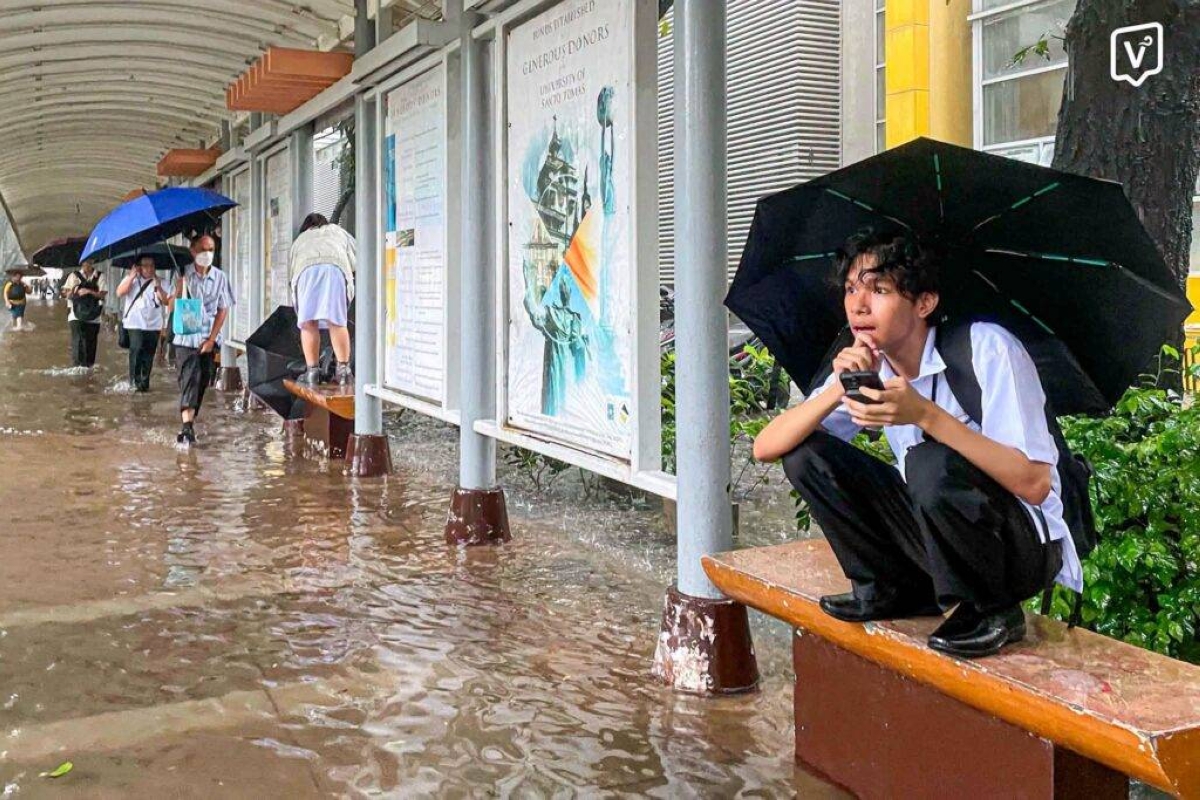
FILIPINOS are often praised for their resilience. But for students trying to get to school through flooded streets, crowded trains and uncertain class suspension announcements, endurance can only do so much.
Many Filipino families already struggle with the cost of education. Heavy rains and severe storms add another challenge, disrupting classes and making the journey to campus difficult or unsafe.
For students, the disruption often begins before classes are canceled. Flooded roads can block transportation routes, while late or conflicting announcements leave them wondering whether to head to school, prepare for online classes, or wait for further instructions.
Hybrid learning helped schools continue teaching during the pandemic and remains an option when face-to-face classes cannot proceed. But shifting online does not automatically mean students can learn as usual. Flooding, damaged belongings, and the strain of difficult commutes can follow them into the virtual classroom.
For Rei, a diplomacy and international affairs student at De La Salle–College of Saint Benilde, flooding is enough to make attending class difficult. Uncertainty over class suspensions adds another layer of stress.
"I live in an area where the rain doesn't even have to be particularly heavy for it to flood," Rei says. "Sometimes the water reaches my knees. When I get off the LRT, it's the same situation in Vito Cruz."
When government authorities and school administrators announce suspensions at different times, students can be left unsure whether they are still expected on campus. Some may already be on their way when an announcement is made.
For commuters like Rei, the problem is not simply whether classes are suspended, but when and how that decision is communicated. Deciding whether it is safe to travel becomes another source of anxiety.
For Richard, an environmental biology student at the University of Santo Tomas, disruptions also eat into time he needs for studying. His schedule is already filled with lengthy laboratory sessions and lectures, leaving him to find extra hours to review his lessons.
Although he lives in Metro Manila, his daily commute can take up to two hours, involving crowded trains and walks in the heat. Even in good weather, the journey is physically and mentally tiring.
Amid flooding in the España area, UST shifted classes online for a week. But for Richard and other students, the effects went beyond a change in learning arrangements.
Floodwaters soaked or damaged personal belongings, while dealing with the aftermath added to their exhaustion and concerns about getting sick. Even after the water receded, returning to their usual routines remained difficult.
Richard believes the government must use the authority entrusted to it to address the causes of recurring floods.
‘No point in Band-Aid solutions’
"There is no point in Band-Aid solutions, like ayuda and handouts," he says, because people will continue to experience flooding without lasting improvements.
His concern raises a broader question: How can young Filipinos reach their potential when the systems meant to support them make something as basic as getting to school so difficult?
Lawyer and educator Isaac Ochotorena says repeated class disruptions can be especially damaging to younger students. He teaches at National University, the Philippine School of Business Administration, and Eulogio "Amang" Rodriguez Institute of Science and Technology.
College students may have more independence in managing their coursework, he says, while elementary and high school students are still building foundational skills and study habits. Frequent interruptions can make that process harder.
"Holistically, how can we do better as a nation in these aspects?" Ochotorena asks.
For him, class cancellations should be considered as part of a wider education policy, rather than treated as isolated responses to each disruption.
He also questions the reliance on online learning as a default substitute, particularly for younger students who may need more structured, face-to-face instruction.
Ochotorena believes authorities should carefully assess the scope of suspensions for anticipated transport strikes and scheduled events. In his view, such decisions should consider whether transportation and public safety risks justify canceling classes across an entire region or the country.
The challenge is to protect students from danger while limiting avoidable interruptions. Safety must guide decisions, but schools and authorities also need clear plans to help students keep up when classes cannot proceed.
The responsibility for keeping education accessible cannot rest solely on students. They cannot control flooded roads, unreliable transportation or announcements that come after they have begun their commute.
These problems require more than another adjustment to class schedules. Long-term investment in flood control and drainage, better public transportation and clearer suspension guidelines can help reduce the barriers students face.
Schools also need to recognize that moving a class online does not erase the circumstances surrounding a disruption. Students may still be dealing with damaged belongings, exhaustion or the work of helping their families recover.
Filipino students have learned to adapt, but adaptation should not be the only response expected of them. The country must also improve the conditions that repeatedly make learning difficult.
Students should not have to choose between their safety and their education whenever heavy rain falls. Preparing the next generation means giving them the chance to learn consistently and safely, with fewer obstacles standing in their way.
The author is a first-year student in the BA Diplomacy and International Affairs program at De La Salle College of Saint Benilde.
